





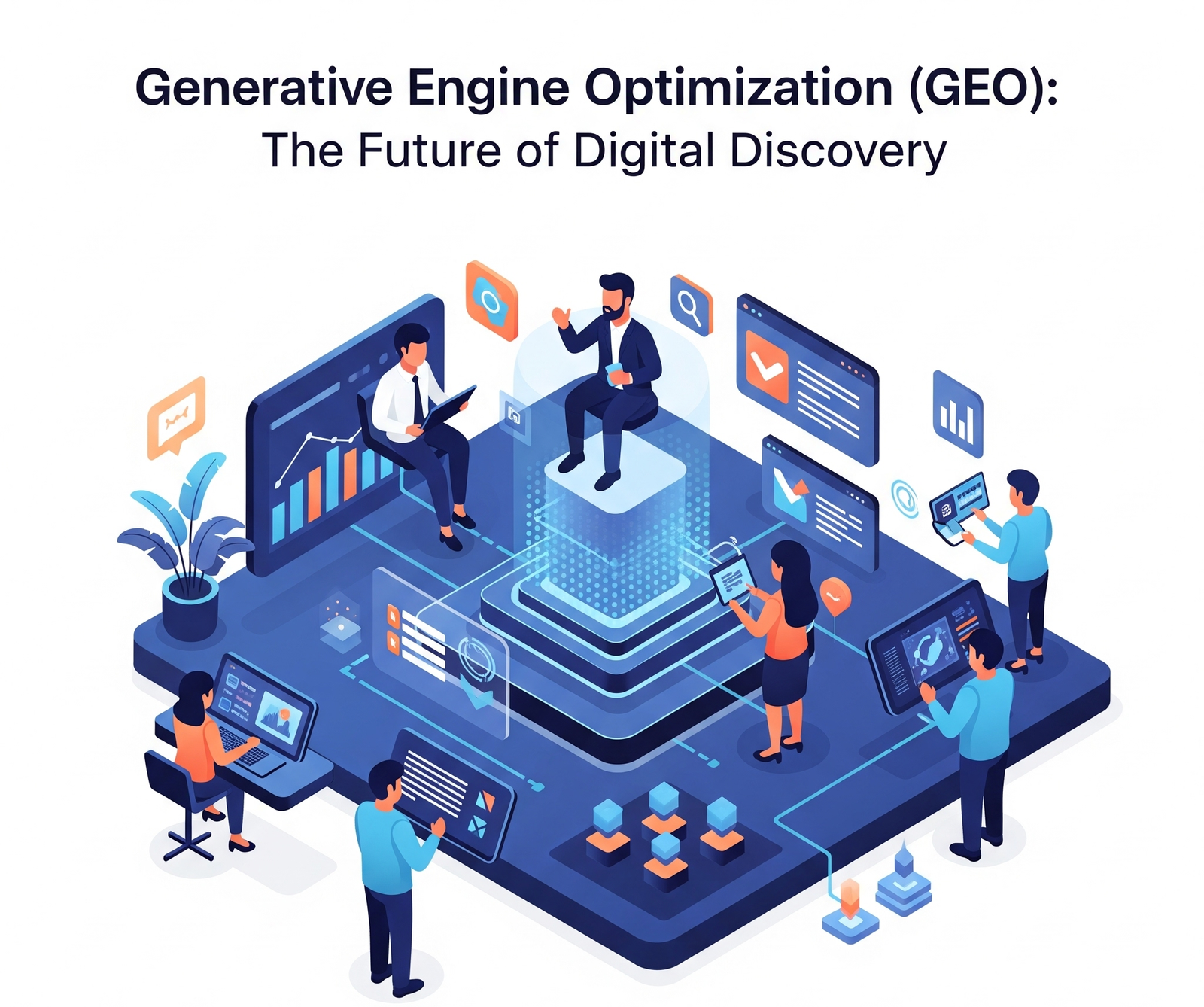
 Generative engine optimization (GEO) is a technique for maximizing your content’s visibility in AI models. Unlike traditional SEO practices, which focus on ranking on SERPs, GEO is about optimizing content for visibility in generative AI engines.
The good news for SEO is that generative engines pull information directly from web content (as well as other sources) to deliver responses to user queries. They use large language models (LLMs) to make sense of the information scraped and provide coherent, relevant answers.
ChatGPT, Perplexity AI, and Google AI Search are all examples of generative engines.
Generative engines work by:
- Interpreting a user’s query.
- Leveraging personal data it may have on the user, such as preferences or conversation history.
- Searching to find relevant answers to the query
- Synthesizing information from these documents into a straightforward response
GEO vs. SEO
GEO and SEO are similar in many ways, as both find relevant, credible content to answer user inquiries. But they also have three key differences. Let’s explore the similarities and differences below.
GEO and SEO Similarities:
These four similarities should bring optimism to SEOs because they suggest the good work done so far is transferable.
-> Designed to help users and provide helpful information.
Whether you’re searching on Google, Bing, ChatGPT, Perplexity, or something else entirely, what’s essential is that you can access the information you need in the easiest and shortest time possible.
One reason Google is so successful is that it has mastered a complex (and ever-changing) algorithm that sorts through content and delivers the best possible result to the person searching. Results meet search intent, and users get what they want.
Why this matters for GEO: If you’re dedicated to providing the best possible content, you have a good chance of gaining visibility in generative AI search engines. These tools need to source the best content to keep users returning.
-> High-quality content is your gateway to visibility.
High-quality content, in terms of landing pages, informational pages, well-thought-out service pages, etc., gets you visibility in generative search engines. As mentioned above, generative engines, like traditional search engines, pull information directly from web content.
Why this matters for GEO: If you’re achieving page one ranks in SEO, you’re likely producing high-quality content. This content will likely perform well in generative search engines, too.
This leads perfectly to my next point: E-E-A-T signals matter for SEO and GEO.
-> E-E-A-T signals are important in SEO and GEO.
Why this matters for GEO: Ranking at the top of Google for any keyword doesn’t come easy. You need to meet a multitude of ranking factors and build E-E-A-T across your site.
-> Keywords and search terms still matter.
Although people search differently in traditional search engines versus generative search engines, there are similarities; users are inputting keywords and search terms. While the input into generative search engines uses more natural language and conversation, there are still words and phrases that contextualize the search.
Why this matters for GEO: Understanding how and what people search, and then meeting search intent is still crucial.
Why is GEO important?
In another HubSpot article about the future of SEO, experts shared their opinions and predictions about the future of AI and SEO.
One opinion that stands out to me is from Nate Tower, who stated (and supported with data) that conversions, by percentage, from LLMs are higher. Tower believes that people chat with AI and see the software more as a friend, which is one reason why conversions from GEO are higher.
Important note: While conversions are higher by percentage, we’re still dealing with small data sets. In terms of quantity, conversions are lower.
That said, it could be an indicator of what’s to come. If people respond well to GEO, you want your business to be visible.
Ultimately, people are using generative search to find answers to their questions and meet their needs. All indicators show that GEO isn’t going anywhere, so keeping up and earning visibility in GEO makes sense. Just remember to manage GEO with SEO.
How does generative engine optimization work?
Learning to use GEO is simpler than it sounds and, in many ways, is overlapped with best SEO practices. AI tools respond well to clear, well-structured information that it can easily synthesize.
This means you should:
- Ensure your content is easy to read and understand.
- Incorporate credible sources, quotes, and statistics to enhance the content’s richness and authority.
- Structure your writing to align with the patterns used by generative engines.
When I’m writing an article, I focus on clear headings, concise paragraphs, lists, and well-sourced information. The same is true for best practices when it comes to SEO, so don’t worry about reinventing the wheel.
Other ways to improve GEO are using AI-friendly structured data, focusing on user intent, using easy-to-read/conversational language, and using unique words to make the content stand out.
These best practices aren’t all that different from SEO best practices. And, as with SEO, there’s no indication that AI-created content is ranking poorly. If your content is high quality, you shouldn’t experience any sort of penalty for leveraging AI content tools, like the ones offered by HubSpot.
How to Implement Generative Engine Optimization (GEO):
If you’re exploring Generative Engine Optimization (GEO) for your brand or clients, here’s how I approach the implementation process in a practical, results-driven way:
1. Start with Understanding User Intent
Before diving into content, I always focus on understanding the user’s intent. What are they really looking for? What questions are they asking? GEO isn’t just about keyword stuffing it’s about creating content that answers real queries in a meaningful, conversational tone.
2. Use AI, But Don’t Rely on It Blindly
Generative AI tools like ChatGPT, Jasper, or Writesonic can be amazing for scaling content ideas, FAQs, and even outlines. But I make sure to edit everything manually aligning tone, ensuring accuracy, and keeping the voice aligned with the brand.
3. Think in Questions, Not Just Keywords
GEO works best when your content mirrors how people naturally search especially in voice search or AI-driven platforms. I focus on using question-based headings like:
- “How does this work?”
- “Why is this important?”
- “What’s the best way to do this?”
This helps the content rank better with AI summarization tools and also improves user engagement.
4. Structure Content for Generative Search Models
I follow a clean structure with clear headings, bullet points, and concise answers. AI models pick up on clarity and structure so it’s not just about what you say, but how you say it.
5. Optimize Beyond Keywords
With GEO, content needs depth, context, and authority. I ensure every piece includes:
- Internal links to relevant resources
- Up-to-date stats and references
- Clear takeaways or CTAs
6. Maintain Strong Technical SEO
Even though GEO is content-focused, technical hygiene is still important. I keep an eye on page speed, mobile responsiveness, structured data (schema), and accessibility all of which help content get indexed and ranked more effectively.
7. Measure, Adapt, Improve
GEO is not a one-time fix. I regularly track performance through tools like Google Search Console and adjust content based on user behavior, impressions, and engagement metrics.
Why We Chose Stepforadder to Lead with Generative Engine Optimization ?
At Stepforadder Systems, we are not just another digital agency, we are pioneers of future-ready solutions. Here is why we are perfectly positioned to integrate Generative Engine Optimization for clients:
-> Deep Technical and Creative Expertise We have seasoned SEO specialists, content strategists, AI enthusiasts, and full-stack developers under one roof. This synergy enables us to not only create AI-optimized content, but also ensure the backend is structured to support it.
-> AI-Centric Approach
Stepforadder is already adapting to AI-driven workflows across design, marketing, and development. GEO and GEOVATE are a natural extension of our existing innovation mindset.
-> Client-First, Future-Focused Our goal isn’t just to get clients ranked-it’s to make them relevant, cited, and trusted by AI engines of the future. Generative Engine Optimization helps us go beyond vanity metrics and focus on real discoverability in AI-driven spaces.
-> Proven Performance
From startups to enterprise-level businesses, we have helped brands grow by combining creative thinking with data-backed execution. Generative Engine Optimization is simply the next evolution of that promise.
How Stepforadder Can Help You Win with GEO:
We plan to integrate GEOVATE strategies across client projects by offering:
- AI-Optimized Blog and Website Content
- Generative Engine-Oriented Topic Research
- Schema and Structured Data Implementation
- E-E-A-T (Experience, Expertise, Authority, Trust) Enhancements
- Reputation Building and Brand Mentions Outreach
Conclusion:
Generative Engine Optimization isn’t just a trend-it’s the natural evolution of search. As AI-generated answers become the norm, being cited by these engines will define brand visibility. With Generative Engine Optimization , we at Stepforadder are ready to lead our clients into this new era of digital marketing-where relevance, credibility, and engagement truly matter.