





Engineered different. Proven in five seconds.
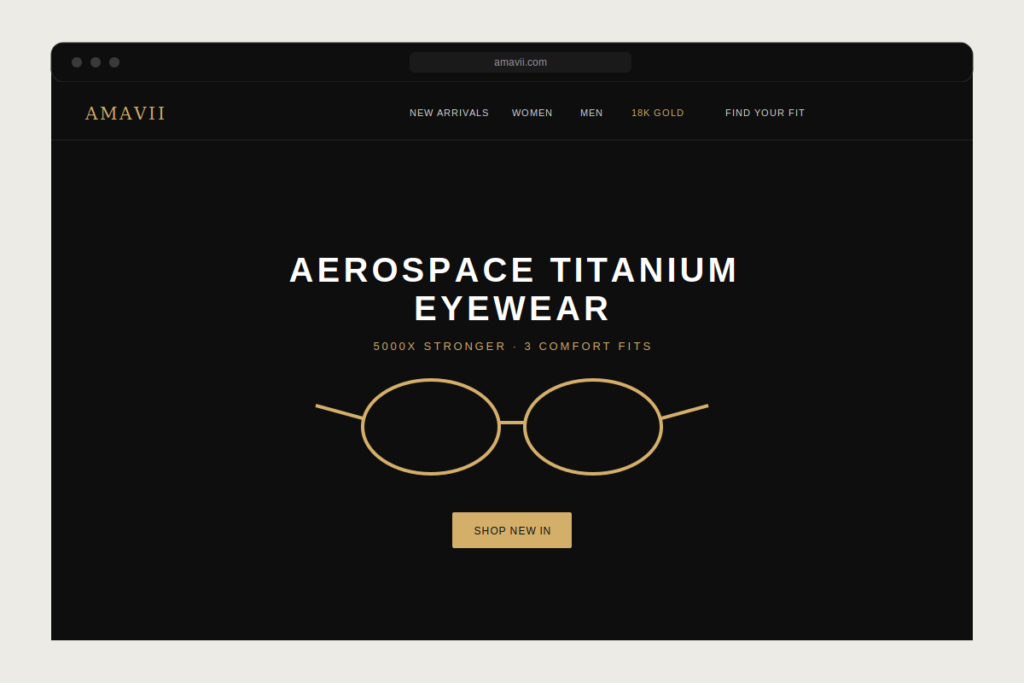
AMAVII builds sunglasses out of aerospace titanium — a material 5,000 times stronger than standard frames, offered across three fits (petite, standard, oversized) so the “right pair” isn’t a guessing game. There’s an 18-karat gold series for a more elevated tier, polarized and wraparound options for function-first shoppers, and a quieter but genuinely meaningful detail running underneath all of it: every purchase plants a tree. It’s a premium eyewear brand with a real technical story, a real design range, and a real sustainability angle competing in a category where most people shop on impulse and vibe rather than material science.
That’s the tension at the heart of AMAVII. This isn’t a $20 impulse buy grabbed off a feed, it’s a considered purchase with a genuine engineering story behind it, priced accordingly. The website had to earn that consideration fast, in the handful of seconds before a scroll-happy shopper moved on to the next ad, the next brand, the next pair of sunglasses that looked roughly the same from a thumbnail.
Premium, but not slow
Luxury and considered don’t have to mean sluggish or overloaded. The real risk with a brand this detail-rich: three fit types, a gold series, a titanium origin story, a tree-planting mission, a whole home collection sitting alongside the eyewear, is trying to say everything at once and, in the process, saying none of it clearly. Visitors don’t read a wall of features when they land on a site. They scan for the one or two things that make a decision easy, and if they don’t find them fast, they leave without ever learning what actually makes the brand worth the price.
So the brief wasn’t “add more information” or “showcase everything AMAVII offers.” It was closer to the opposite: figure out which two or three facts actually move someone from browsing to buying, and build the entire site experience around surfacing those, fast, everywhere a hesitant shopper might need them — the homepage, the product page, the ad they clicked to get there in the first place.
The approach
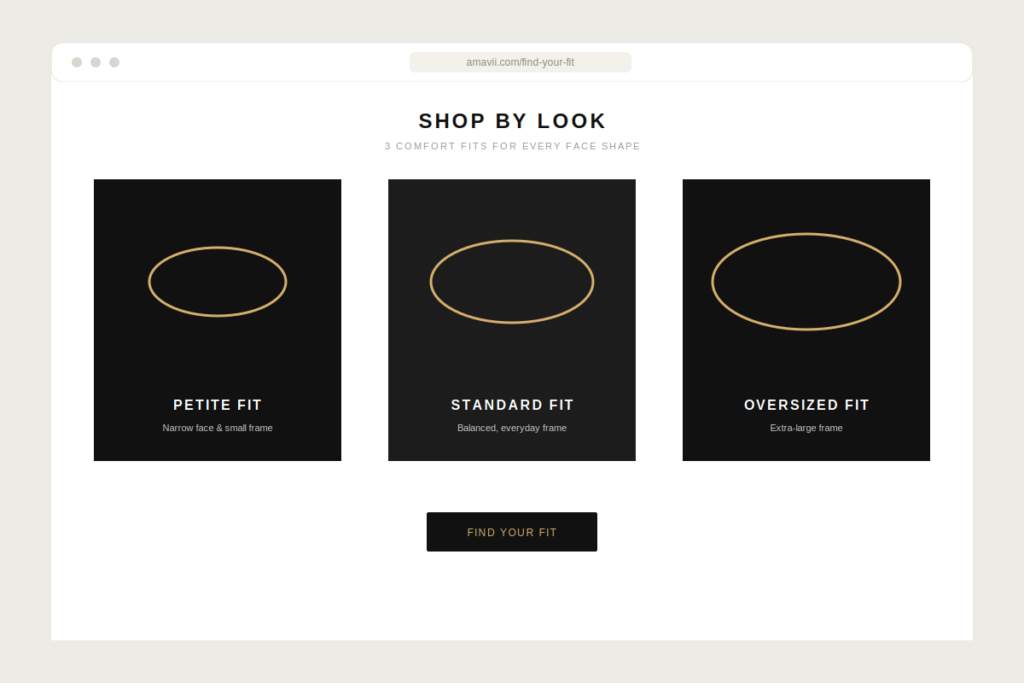
Design that sells fit, not just frames. Sunglasses live or die on one question: will this suit my face. Most eyewear sites answer that with an endless grid of lookalike product photos and hope the customer figures it out on their own, usually after clicking through a dozen near-identical styles. We restructured the shopping experience around AMAVII’s three-fit system instead — petite, standard, oversized — so customers could self-select their category up front, before ever scrolling a general product grid. That one change turns browsing from guesswork into a guided decision, which matters enormously in a category with notoriously high return rates driven by nothing more complicated than “it just didn’t suit me.” A fit quiz was built out further to formalize that guidance for shoppers who wanted an even more direct answer.
SEO built around a genuinely different material. “Aerospace titanium” isn’t a term most competitors own yet that’s an opening, not a footnote to bury in a spec sheet three scrolls down. We built dedicated content and on-page SEO to claim that territory early, positioning AMAVII as the aerospace titanium eyewear brand rather than one more sunglasses label competing purely on style. Alongside that, we targeted the more common, higher-volume searches shoppers already use every day — polarized sunglasses, designer sunglasses, oversized sunglasses — so the site captures both the curious researcher discovering the material story for the first time and the ready-to-buy shopper who already knows the category and just needs to find the right brand.
Ads that lead with proof, not just product shots. Titanium strength and the buy-one-plant-a-tree promise are AMAVII’s two most persuasive, most shareable facts — the kind of specific, surprising detail that makes someone stop mid-scroll and actually read the caption instead of swiping past another pair of sunglasses. So creative was built to put those front and center, rather than relying on product photography alone to do all the work the way most eyewear ads do. Retargeting was designed around the fit quiz specifically, giving hesitant shoppers a lower-commitment next step than “buy now” — something that felt like getting matched to the right product, not being sold to on the first pass.
Right now
Full performance numbers are still being finalized with AMAVII and will be added here once they’re ready to publish — expect specifics on traffic, conversion, and paid efficiency in that update, alongside a client testimonial once one is ready to share.
For now, here’s the shift in plain terms: a storefront built around how people actually choose sunglasses instead of how sunglasses are usually merchandised, search visibility around a material story competitors haven’t claimed yet, and ad creative that leads with what makes AMAVII genuinely different instead of blending in with everyone else’s product shots. The pieces are in place for the brand’s real differentiation to finally do the selling it was always capable of.
Want a growth story like this one? Book a Strategy Call →