





Good coffee sells itself. Getting people to try it is the hard part.
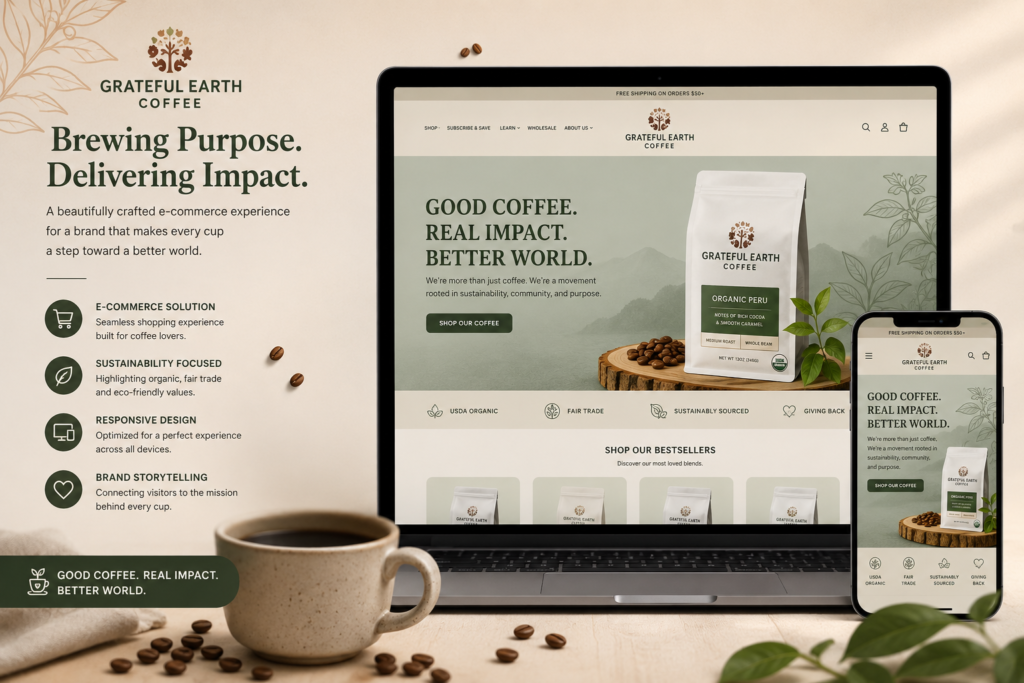
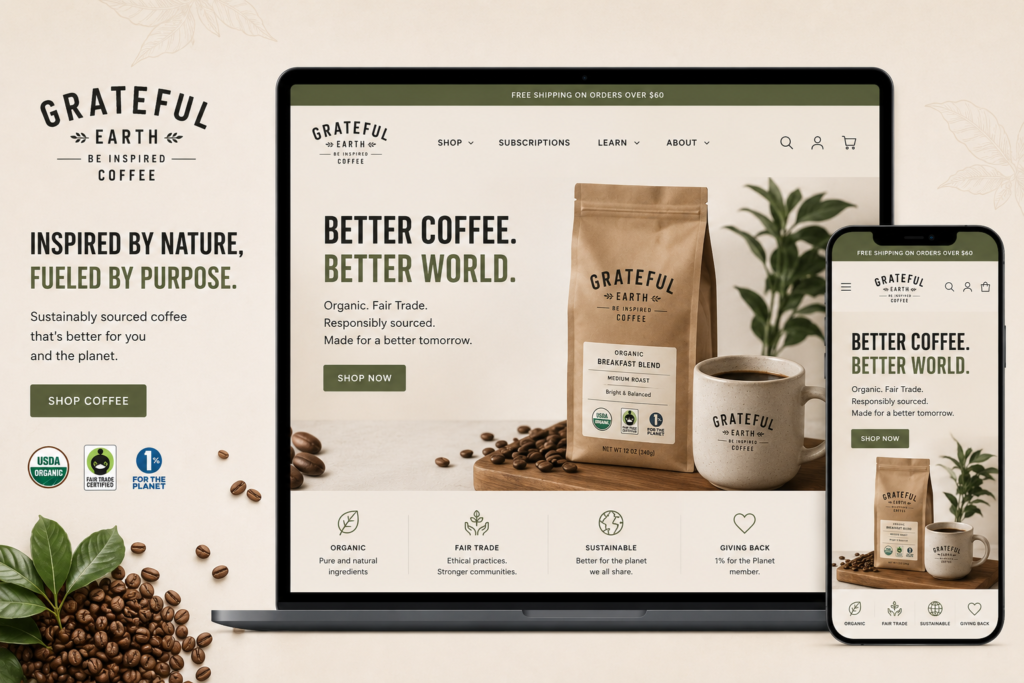
Grateful Earth makes mushroom coffee: Lion’s Mane, Chaga, turmeric, cinnamon, black pepper, and L-theanine, blended into a cup that tastes like coffee but skips the crash. It already had what most brands spend years chasing: hundreds of thousands of customers, a flood of genuine five-star reviews, and people who talk about it unprompted, in comment sections and group chats, without being asked to.
That’s rare. Most D2C brands are still trying to manufacture that kind of word of mouth. Grateful Earth already had it.
What it didn’t have, yet, was a digital presence that moved as fast as that word of mouth did.
The problem wasn't the product. It was the first ten seconds.
Functional coffee is a skeptical category, and for good reason. Shoppers land on a page like this having already been burned by three other “healthier alternative” brands that overpromised and under-delivered: chalky texture, bitter aftertaste, a long list of ingredients nobody explained. So the instinct on arrival isn’t curiosity, it’s suspicion.
If a site can’t answer why this actually works and does it actually taste good almost immediately, the visitor is gone. Not because the coffee isn’t good: plenty of five-star reviews say otherwise but because they never stuck around long enough to find that out.
That was the real brief, underneath the usual “grow the business” ask: close the gap between how good the product already is and how fast a total stranger could be convinced of that. Everything else: the SEO, the ads, the page layout, was in service of that one gap.
Three things we changed
The storefront. We rebuilt product pages so the ingredient story and the taste promise show up before the scroll, not after it. Each nootropic — Lion’s Mane, Chaga, turmeric — got its “why it’s in here” explained in plain language instead of supplement-label jargon, right where a first-time visitor’s eyes land first. Real reviews and video testimonials were pulled up near the decision point, close to the add-to-cart button, instead of buried at the bottom of the page where most visitors never scroll far enough to see them. The goal wasn’t a prettier site. It was a faster path from “what is this?” to “I trust this enough to try it.”
The search strategy. Rather than fighting bigger, better-funded wellness brands for expensive, generic terms like “healthy coffee,” we built out content and landing pages around the specific questions people were already typing into Google — lion’s mane coffee, mushroom coffee benefits, coffee without the jitters, adaptogenic coffee. These are lower-competition, higher-intent searches: people asking these exact questions are already halfway to being customers, they just haven’t found the right brand yet. Dedicated pages for each core ingredient let Grateful Earth meet that curiosity earlier, before a visitor has even decided which brand to trust.
The ad engine. We let the customers do the talking. Paid creative leaned on testimonial and video content — real customers explaining why they switched, what convinced them, what surprised them about the taste — to do the trust-building that cold traffic usually needs from a brand it’s never heard of. Retargeting was built around the one objection almost everyone has before trying mushroom coffee: does it actually taste good, or does it taste like health food. And subscription-focused offers were layered in to turn a first, tentative order into a recurring one, since repeat purchase is where a brand like this actually compounds.
Where it stands
We’re still pulling together full performance numbers with Grateful Earth and will update this page once they’re ready to publish — expect specifics on traffic, conversion, and ad efficiency here soon.
In the meantime, here’s the shift in plain terms: the site now explains itself in seconds instead of paragraphs. Search traffic is being built around real curiosity instead of guesswork on generic keywords. And the brand’s single biggest asset — its customers — are doing more of the convincing than any ad copy could on its own.
Want a growth story like this one? Book a Strategy Call →