




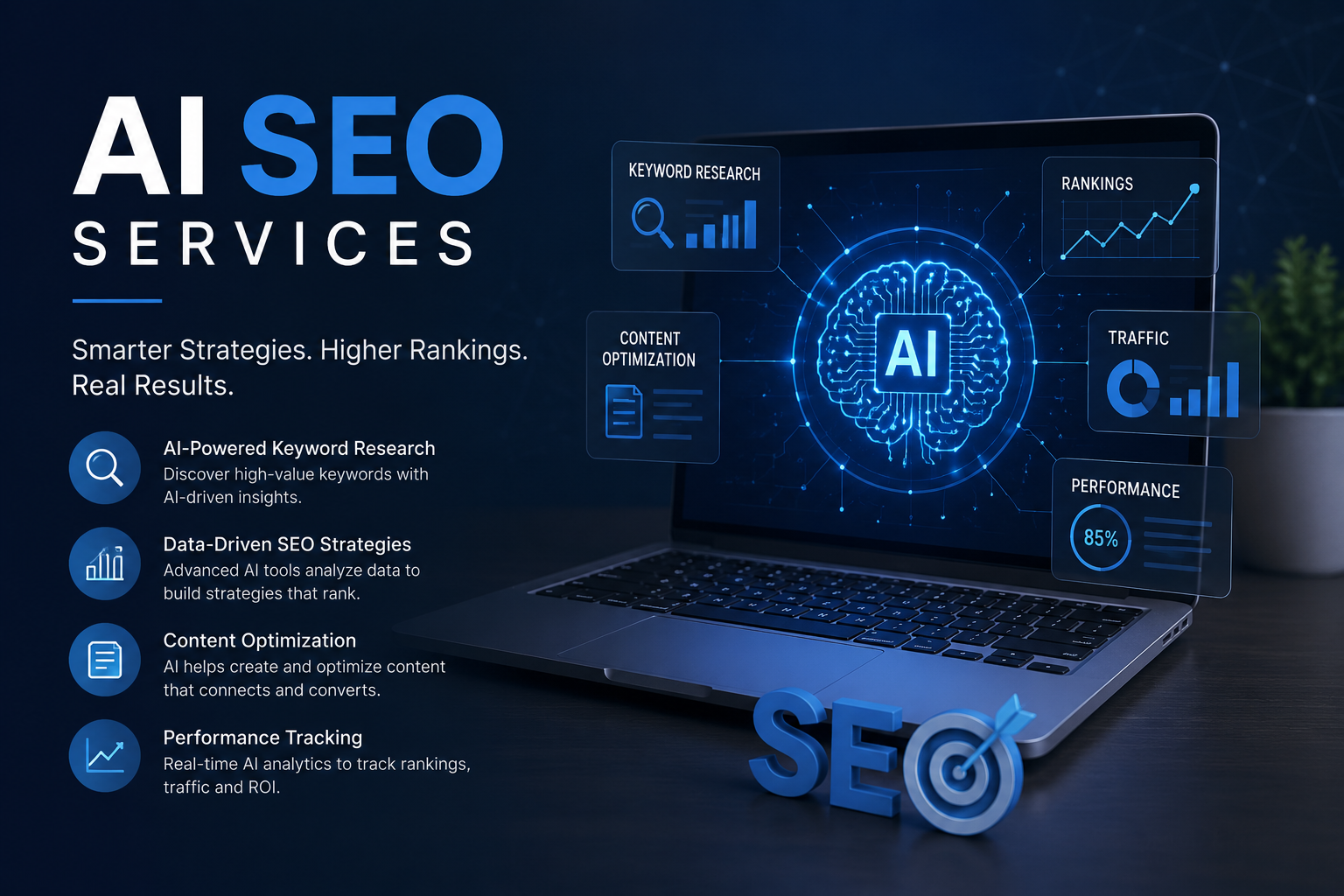
In 2026, businesses are no longer competing only for traditional Google rankings. Search visibility increasingly includes AI Overviews, AI Mode, and conversational discovery experiences, where users can receive direct answers and recommendations without relying solely on a traditional list of search results.
But the fundamentals haven’t disappeared. Google says its generative AI search features still rely on core Search ranking and quality systems.
The difference is that businesses now need to create content that is technically accessible, genuinely useful, easy to understand, and strong enough to be selected as a source across traditional and AI-powered search experiences.
For businesses, adapting to AI does not mean abandoning SEO. It means evolving the existing strategy to better understand search intent, create useful content, strengthen topical authority, and improve visibility wherever potential customers are searching.
In this guide, you’ll learn:
- How AI is changing Google Search
- How AI Overviews affect organic traffic
- SEO vs. AEO vs. GEO
- How to optimize content for AI search
- How to build topical authority
- How to measure AI-search visibility
- What businesses should do in 2026
How Is AI Changing SEO?
AI is changing both how people search and how search engines understand information.
Traditional searches often consisted of short keyword phrases such as:
“SEO company India”
Today, users are increasingly comfortable asking longer, more specific questions such as:
“Which SEO company can help my small business improve its Google visibility?”
This shift means search engines need to understand more than individual keywords. They need to understand context, intent, relationships between topics, and what the user is actually trying to accomplish.
For businesses, this creates an important change in SEO strategy.
Instead of creating content simply because a keyword has search volume, businesses need to create content that provides a clear and useful answer to the underlying question.
This makes search intent, content quality, structure, and topical relevance increasingly important.
Search Visibility Is More Than Traditional Rankings
Ranking on Google’s first page remains valuable, but it is no longer the only way users can discover a business.
Search experiences now include features such as:
- AI Overviews
- AI Mode
- Featured snippets
- Conversational search
- Related questions
- Local search features
- AI-generated recommendations
Google’s current documentation specifically notes that its generative AI features can surface content from Google’s Search index, while SEO best practices remain relevant for these experiences.
This creates a broader goal for businesses:
Don’t optimize only for rankings. Optimize for search visibility.
Your content should be useful enough to rank traditionally while also being clear and authoritative enough to potentially be referenced in AI-generated answers.
How AI Overviews Can Affect Organic Traffic
AI-powered search can change the traditional relationship between a search query and a website visit.
When an AI-generated answer provides information directly on the search results page, some users may find what they need without immediately clicking through to a website.
At the same time, AI search can create new opportunities for websites that are selected as sources or referenced within an answer.
This means businesses should not evaluate SEO performance using rankings and traffic alone.
A more complete measurement strategy should consider:
- Organic impressions
- Organic clicks
- Click-through rate
- Keyword rankings
- AI-search visibility
- Brand mentions
- Conversions
- Engagement
- Leads and revenue
Google has also clarified that AI Overviews are included in Search Console’s Performance reporting methodology, giving website owners another way to understand search visibility.
The key is to focus on qualified visibility and business outcomes, not just the number of clicks.
SEO vs. AEO vs. GEO: What's the Difference?
| Aspect | SEO | AEO | GEO |
|---|---|---|---|
| Full Form | Search Engine Optimization | Answer Engine Optimization | Generative Engine Optimization |
| Primary Goal | Improve search rankings | Get selected for direct answers | Increase visibility in AI responses |
| Main Focus | Rankings and organic traffic | Questions and direct answers | AI answers and citations |
| Target Experience | Traditional search results | Answer engines and search features | Generative AI and AI search |
| Content Approach | Relevant, comprehensive content | Clear, concise, question-based answers | Authoritative, context-rich content |
| Key Optimization | Keywords, technical SEO, links | FAQs, structured answers, conversational queries | Topical authority, entities, citations |
| Example | Ranking on Google's first page | Appearing as a direct answer | Being mentioned or cited by AI |
| Success Metrics | Rankings, traffic, CTR, conversions | Answer visibility, impressions, clicks | AI mentions, citations, brand visibility |
How to Optimize Content for AI Search
There is no magic formula that guarantees inclusion in an AI-generated response.
However, businesses can make their content more useful and accessible by following strong SEO fundamentals and creating information that clearly satisfies user needs.
Don’t make users search through multiple paragraphs to find the answer.
Start important sections with a direct explanation and then provide supporting detail.
2. Use Clear Content Structure
Organize content using:
- Descriptive headings
- Short paragraphs
- Bullet points
- Lists
- FAQs
- Relevant examples
A logical structure makes content easier for both users and search systems to understand.
3. Focus on Search Intent
Understand why someone is searching before creating content.
A user searching for:
“What is AI SEO?”
has a different intent from someone searching for:
“AI SEO services for small businesses.”
Your content should address the specific need behind the query.
4. Demonstrate Real Expertise
Generic information is easy to produce.
Useful expertise is harder to replicate.
Strengthen content with:
- Original insights
- Practical examples
- Case studies
- First-hand experience
- Expert commentary
- Relevant data
- Clear author information
5. Keep Information Accurate and Updated
AI search does not eliminate the need for reliable information.
Review important content regularly and update outdated statistics, examples, recommendations, and industry information.
Build Topical Authority Instead of Chasing Individual Keywords
One of the biggest changes in modern SEO is the move from isolated keyword targeting toward comprehensive topic coverage.
For example, a business offering AI SEO services should not publish only one article about “AI SEO.”
It can build supporting content around topics such as:
- AI SEO strategies
- AI search optimization
- Google AI Overviews
- AEO
- GEO
- Technical SEO
- Search intent
- Topical authority
- AI content optimization
- SEO analytics
- AI search visibility
These related pages can be connected through a strong internal linking structure.
The goal is to demonstrate depth and relevance across an entire subject, rather than repeatedly targeting the same keyword.
AI-Powered Keyword Research
Keyword research is also becoming more sophisticated.
Instead of focusing only on search volume, AI-assisted research can help identify:
- Search intent
- Related questions
- Long-tail queries
- Semantic relationships
- Topic clusters
- Content gaps
- Emerging search trends
- Competitor opportunities
At StepForAdder, AI-assisted research can be combined with human SEO analysis to create content strategies around the questions and topics that matter to a business’s target audience.
The objective is not to generate as many keywords as possible.
The objective is to identify the right topics, intent, and opportunities.
AI-Driven Content Optimization
AI can process large amounts of information quickly, making it useful for content research and optimization.
AI-assisted workflows can help identify opportunities involving:
- Headings
- Metadata
- Content gaps
- Topic coverage
- Search intent
- Semantic relevance
- Outdated information
- Internal linking
However, AI should not replace editorial judgment.
Automatically publishing generic AI-generated content can result in information that lacks originality, expertise, or real value.
A stronger approach is:
AI for research and efficiency + human expertise for strategy, accuracy, originality, and quality.
Technical SEO Still Matters
AI search does not make technical SEO irrelevant.
If search engines cannot properly crawl, understand, or access your website, strong content alone may not be enough.
Businesses should continue monitoring:
- Crawlability
- Indexation
- Site structure
- Page speed
- Mobile usability
- Core Web Vitals
- Broken links
- Metadata
- Internal linking
- Structured data
At StepForAdder, AI-assisted diagnostics can complement traditional technical SEO analysis to identify potential issues and optimization opportunities.
A strong technical foundation helps ensure that valuable content can actually be discovered and understood.
How to Measure AI-Search Visibility
AI search introduces a broader question:
How do you know whether your brand is visible in AI-driven search?
Traditional SEO metrics should still be monitored, including:
- Organic traffic
- Rankings
- Impressions
- CTR
- Conversions
- Leads
- Revenue
But businesses should also begin paying attention to:
- AI-generated mentions
- Source citations
- Brand visibility in AI answers
- Visibility for conversational queries
- Competitor mentions
- Changes in branded search behavior
The exact measurement process will continue evolving as AI search develops.
For that reason, businesses should combine traditional SEO reporting with AI-search monitoring rather than replacing one with the other.
Why Businesses Should Invest in AI SEO Services
AI is making search more competitive, but it is also creating new opportunities.
A well-planned AI SEO strategy can help businesses:
- Discover new search opportunities
- Understand changing user intent
- Create more useful content
- Improve technical SEO
- Build topical authority
- Optimize for conversational search
- Strengthen online visibility
- Monitor competitors
- Adapt to AI-powered search experiences
- Make better data-driven SEO decisions
The businesses that adapt early can build stronger foundations for the changing search landscape.
How StepForAdder Adapts SEO for the AI Era
At StepForAdder, AI SEO is not about replacing traditional SEO with automation.
The approach combines traditional SEO expertise, AI-driven insights, technical optimization, content strategy, and human decision-making.
Its AI-focused SEO approach includes:
- AI-assisted keyword research
- Search-intent analysis
- Content optimization
- Technical SEO
- AEO
- GEO
- AI-search optimization
- Competitor analysis
- Performance monitoring
StepForAdder also combines SEO with website development, digital marketing, AI automation, and other digital solutions. This broader technical and marketing experience allows the team to approach search visibility from both the content and technology sides.
The Future of SEO Is AI + Human Expertise
AI is not making SEO irrelevant.
Instead, it is changing what effective SEO looks like.
AI can help businesses process information faster, identify patterns, analyze search behavior, discover content opportunities, and automate repetitive tasks.
But successful SEO still requires:
- Strategic thinking
- Creativity
- Industry knowledge
- Original insights
- Editorial judgment
- Technical expertise
- Understanding of the audience
- Human decision-making
The strongest approach is therefore not AI versus SEO.
It is:
AI + SEO + human expertise.
Businesses that combine these elements can adapt more effectively as search continues to evolve.
What Businesses Should Do in 2026
Businesses don’t need to completely rebuild their SEO strategy because of AI.
Instead, they should strengthen the fundamentals while adapting to new search experiences.
Start by:
- Audit your existing SEO performance
- Understand your audience’s search intent
- Build content around important topics, not isolated keywords
- Improve technical SEO and website accessibility
- Create direct, useful, well-structured answers
- Strengthen expertise and trust signals
- Optimize content for conversational searches
- Monitor AI-search visibility alongside traditional rankings
- Use AI to improve research and efficiency
- Keep human expertise involved in strategy and content quality
The goal isn’t to chase every new AI platform.
The goal is to build a website that is useful, trustworthy, technically strong, and easy for both people and search systems to understand.
Ready to Make Your SEO AI-Ready?
The search landscape is changing, and businesses that rely only on traditional ranking strategies may miss emerging opportunities.
StepForAdder helps businesses adapt through AI SEO services, technical SEO, content optimization, AEO, GEO, and AI-search visibility strategies.
Whether you’re a startup, small business, or growing enterprise, a future-ready SEO strategy can help you build stronger visibility and sustainable organic growth.
Don’t just optimize for today’s search. Build your digital visibility for the future.
About Yogesh Sanger
Yogesh Sanger is an experienced SEO and digital marketing professional with expertise in search engine optimization, content strategy, and online visibility.
With a strong understanding of evolving search trends, Yogesh focuses on helping businesses adapt their SEO strategies to AI-powered search. His expertise includes SEO, AI-driven search, content optimization, Answer Engine Optimization (AEO), and Generative Engine Optimization (GEO).
By combining traditional SEO best practices with modern AI-focused strategies, Yogesh provides practical insights that help businesses improve their search visibility and stay competitive in the changing digital landscape.
1. How is AI changing SEO?
AI is changing SEO by making search more conversational and intent-focused. Businesses now need to create helpful content that answers user questions while optimizing for both traditional search engines and AI-powered search platforms.
2. What are AI SEO services?
AI SEO services use AI-powered tools and insights to improve keyword research, content optimization, search intent analysis, technical SEO, and visibility across AI-driven search platforms.
3. What is the difference between SEO, AEO, and GEO?
SEO focuses on improving visibility in traditional search engines. AEO (Answer Engine Optimization) focuses on providing direct answers to user questions, while GEO (Generative Engine Optimization) focuses on improving visibility in AI-generated search results.
4. Can AI replace human SEO experts?
No. AI can help analyze data, identify patterns, research topics, and improve efficiency, but human expertise is still important for strategy, creativity, brand understanding, and decision-making.
5. Why should businesses invest in AI SEO services?
AI SEO can help businesses understand changing search behavior, discover new content opportunities, improve search visibility, optimize their websites, and reach users across traditional and AI-driven search experiences.